


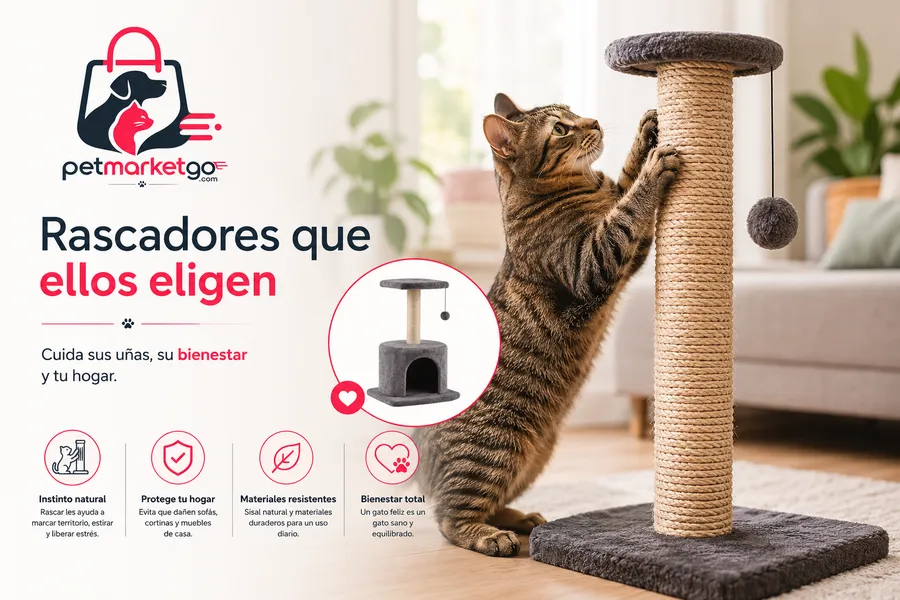
It's three in the morning and you hear that unmistakable sound: claws against the sofa. Before scolding your cat, it's worth asking why they do it and, more importantly, whether the scratching post at home is still doing its job. Scratching isn't a whim or mischief — it's an instinctive need as essential to a cat as eating or sleeping, and understanding this is the first step toward living together in harmony.
Why cats need to scratch, beyond just their claws
When a cat scratches, it isn't just filing down the natural growth of its claws: it's also marking territory through the scent glands in its paw pads, stretching its spine and front leg muscles after a nap, and releasing built-up tension, especially in cats that live strictly indoors. A suitable scratching post covers all three functions at once; an unsuitable or worn-out one stops serving any of them, and that's when problems with your furniture begin.
The five signs it's time to replace it
First, your cat starts scratching the sofa, curtains, or rug instead of going to their usual post, looking for a surface that offers more resistance. Second, the post is no longer tall enough for a full-body stretch: if you notice they stop halfway or rest their back paws on the floor while scratching, that's a clear sign. Third, the cardboard, sisal, or rope base is frayed, peeling, or outright broken, and no longer grips their claws. Fourth, they seem more restless, meow more than usual near the post, or appear frustrated after using it, hinting that the scratching session isn't satisfying anymore. And fifth, they avoid it entirely for several days in a row, the strongest sign that the post has stopped being appealing.
Types of scratching posts and which one fits each cat
Vertical natural sisal posts are the most recommended by feline behaviorists because they mimic tree bark and allow a full-body stretch; they should be at least as tall as your cat standing up on its hind legs. Horizontal corrugated cardboard scratchers are great as a complement, especially for older cats or those with joint issues who prefer scratching at ground level. Rope scratchers are extremely durable and sturdy, perfect for particularly active cats or multi-cat households sharing the same post. And multi-level cat trees combine scratching areas with resting platforms, adding environmental enrichment for cats that spend a lot of time home alone.
How to choose the right model
Stability is the most important factor: if the post wobbles at the first swipe, your cat will stop using it almost immediately out of instinctive caution, so look for wide, heavy bases. Material matters too: natural sisal holds up better over time than cardboard, although cardboard is more affordable and easier to replace. Finally, consider placement: setting it near high-traffic areas, by a window, or close to where your cat sleeps greatly increases the odds it will be used regularly, compared to tucking it away in a rarely visited corner.
How to transition to a new scratching post
Place the new post next to the old one for a few days instead of swapping it out all at once, so your cat can get used to the new scent and texture without losing its usual reference point. You can rub a little catnip or valerian on the new surface to make it appealing from day one, and reward your cat with pets or a treat every time they use it. Remove the old post only once you see the new one being used normally, avoiding the stress of an abrupt change.
At PetMarketGo we carry scratching posts in various sizes, materials, and designs, from simple sisal posts to multi-level cat trees, so you can find the one that best fits your home and your cat's personality.