

Every evening, the moment you pick up the leash, your dog starts spinning with excitement. That moment should be pure joy for both of you, but poorly chosen walking gear can turn those minutes into a struggle of pulling, choking sounds, and small scares. The question "harness or collar?" sounds simple, but behind it lies canine anatomy, behavior, and a good dose of common sense. In this article we break it all down calmly so you can make the best decision for your four-legged companion.
Why walking gear is not just an accessory
We tend to think of collars and harnesses as purely practical, almost decorative items, but in reality they act directly on the biomechanics of a dog's neck, back, and chest every single time they head out for a walk. A poor fit, a rigid material, or a badly placed attachment point can cause micro-traumas that, over the months, turn into chronic discomfort, changes in posture while walking, or even more serious injuries to the trachea and cervical spine. That's why it's worth spending five minutes thinking it through before buying the first one you see on the shelf.
The collar: when it's a good choice and when it isn't
The classic collar has undeniable advantages: it's easy to put on, keeps the ID tag visible, and works well for calm adult dogs who are already used to walking on a loose leash. However, the full force of any pull lands on a very sensitive area, the trachea, which makes it a poor choice for small breeds prone to tracheal collapse, such as Yorkshire Terriers, Pomeranians, or Chihuahuas, as well as for any dog still learning to walk without pulling. If your dog coughs, sounds like they're choking, or makes a honking noise after a tug, that's a clear sign the collar is taking a toll and it's time to rethink the setup.
The harness: types and what each one is for
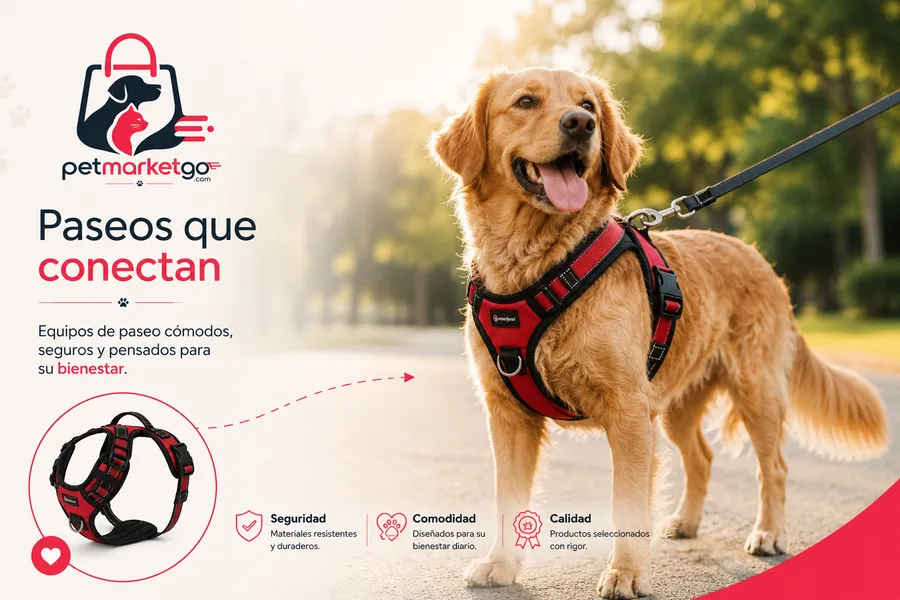
A harness spreads the force across the chest and shoulders instead of concentrating it on the neck, making it the safer choice for the vast majority of dogs, especially puppies, small breeds, brachycephalic dogs (like French Bulldogs or Pugs), and any dog that pulls on the leash. Not all harnesses are the same: front-clip harnesses, attached at the chest, help redirect a pulling dog's movement back toward you and are ideal during training; back-clip harnesses, attached along the spine, offer more freedom of movement and are perfect for long, relaxed walks or running with your dog; and padded vest-style harnesses are very comfortable for dogs with sensitive skin or in cold climates.
How to take measurements and check the perfect fit
Before buying, measure your dog's chest girth just behind the front legs and their neck circumference, always comparing them to the manufacturer's size chart, since it varies quite a bit between brands. Once the harness or collar is on, apply the two-finger rule: you should be able to slide exactly two fingers, not one, not three, between the strap and your dog's body. Too loose and the dog could slip out with a sudden movement; too tight and it will chafe the skin or make breathing difficult. Also check for rigid seams right under the armpits, a very delicate area that's often overlooked.
Special cases: puppies, brachycephalic breeds, and reactive dogs
Puppies grow fast, so it's best to choose adjustable harnesses with several buckles and check the fit every few weeks. Brachycephalic breeds, with their flat faces, already have a harder time breathing, so any extra pressure on the neck can be dangerous — for them, a harness isn't just a recommendation, it's practically mandatory. And for reactive dogs or heavy pullers, a front-clip harness combined with a short leash helps you keep control without resorting to choke or prong collars, which cause pain and don't solve the underlying issue, only mask it.
Common mistakes worth avoiding
Buying gear "by eye" without measuring your dog, letting the harness sit so loose it constantly rubs the skin, using the same collar for years without checking worn seams and buckles, or ignoring signs of coughing and choking are the most common mistakes we see among the families who visit our store. None of them are serious if corrected in time, but all of them chip away at the daily walk experience, which should be one of the best moments of the day for both dog and human.
At PetMarketGo you'll find harnesses and collars in different sizes, colors, and durable materials, designed to make every walk safe, comfortable, and worry-free. If you're unsure which model best suits your dog's breed, age, or temperament, our team will be happy to help you choose.